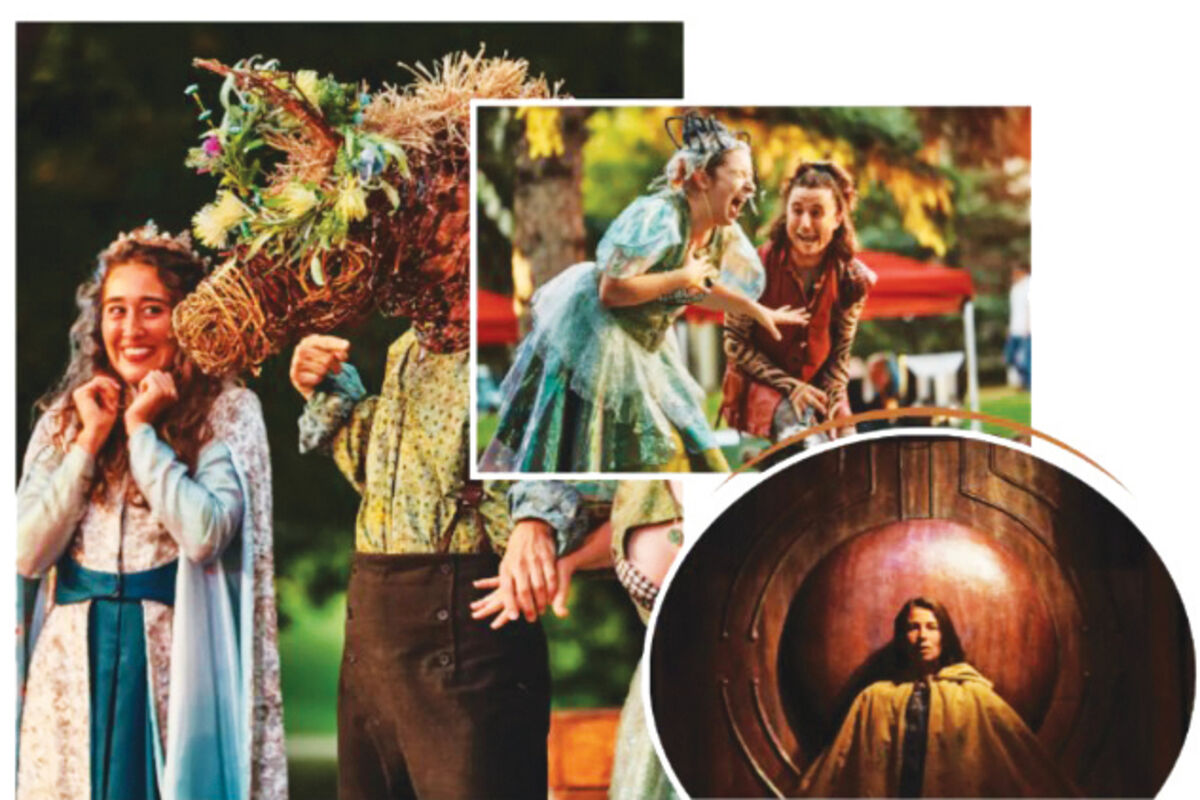
Montana Shakespeare in the Parks (MSIP) will present HENRY V on Sunday, September 7th at the Main Street Green (next to the Star Theatre) at 5 PM. Here, Executive Artist Directory and HENRY V Director Kevin Asselin gives attendees an inside look at MSIP, the works of Shakespeare, and the upcoming HENRY V presentation, brought to Whitehall by Gold Junction Presents.
Kevin, you have been a part of this company for 24 years (including the past 11 years as Executive Artistic Director). You are intimately familiar with the communities we visit and audiences we play to. What about MSIP continues to inspire you? What are your hopes for MSIP's future?
There are many things about MSIP that continue to inspire me as both an artist and leader. I'm deeply inspired by the number of young people that are actively involved with the organization and how the organization brings people together.
During a time where there is conflict, divisiveness, and chaos, Shakespeare in the Parks creates an atmosphere and opportunity for people to come together regardless of socioeconomic background or political lines and share in an experience, one that exists in their backyard every summer.
So, it's not really even about Shakespeare. Shakespeare is just the vehicle through which we can unite communities and cherish the opportunity to be together, all for free.
We are sustained through the investment our communities put into the organization by coming out year after year, affirming that Shakespeare in the Parks is owned, is driven by our audiences.
My hope for the future is that we sustain the effort of keeping these programs free and accessible for generations to come. I hope that we continue to bring new audience members into the fold. One of our primary goals within the organization is audience development and continued outreach. We serve a large population already between the five different states that we visit, but to find ways to invite new people into what we do and continue inspiring audiences through live performance and engagement is very important.
This summer, MSIP welcomes back six actor alumni and five actors new to MSIP. Over 85% of our production staff are alumni as well! What about MSIP keeps folks coming back and what elements of the experience do you think are particularly exciting for newcomers?
Over the past several years, we have seen an increase in the number of folks who return to this artistic community. This summer, we welcome back six alumni in the acting company, along with five new actors. Additionally, over 80 percent of our production staff are alumni.
As our costume designer Jeremy Floyd always says, it's an artist summer camp. Nearly the entire costume shop comes back year after year, as does the scene shop. Just as we continue to be successful in bringing communities together out on the road, our team here works hard to create an atmosphere that ensures our artists have that same meaningful experience.
We really value artist feedback and implement new changes to make it a better experience for them each year. Artists come here from Chicago, New York, Houston, all across the country to spend six to eight weeks building these shows from the ground up! So, we work hard to create a home away from home and I feel that our artists appreciate that.
It's a tough time in the theatre industry. It's increasingly difficult to recruit people for regional theatre experiences, and so it's important to create an environment where everybody feels appreciated and valued. It's also important to create a space where artistic integrity can be explored freely. MSIP is unique in that we have the most supportive, non-judgmental audiences on the planet! The level of artistic freedom and expression our artists have is immense, knowing that our audiences will ultimately appreciate and value what we create. That's certainly a part of what brings artists back.
For newcomers, they're met with an artistic family embedded in the experience. They learn from alumni and bring that into their own expression. We auditioned close to 400 people throughout the course of the year. It's tricky to find individuals who are not only artistically fueled by their creativity, but human beings that appreciate an experience like this who are open to new adventures and what we offer here in Bozeman and beyond.
It has been over 10 years since MSIP has produced Henry V. What about this story do you think audiences will connect with the most in 2025? Are there particular themes you look forward to leaning into? What is it about this play that excites you most as a director?
I've had the opportunity to work with this play before, both as an actor and fight director, but have never directed it. I come from a military family. My siblings and my father were enlisted, and my grandfather was a Chief of Police, so I've always had a deep level of appreciation for service and patriotism, which are big themes in this play.
Knowing that Montana has the second highest veteran population per capita in the country has always resonated with me. Several years ago, we did Henry IV Part I and set it in World War I era when we learned that Montana had one of the highest World War I veteran populations in the country.
These ideas of loyalty, patriotism, and service are rooted in the Montana way of life. When I go to communities and observe our audiences of all generations there are many men and women who proudly display the service that they have dedicated to our country.
One of the play's most famous quotes is "We happy few, we band of brothers." The play's focus on patriotism and togetherness are themes that I am really excited to present to our communities to give this reminder of the importance of ensemble, brotherhood, and togetherness.
It's also important to highlight Henry as an individual. You're talking about a young man who has newly become the leader of a nation torn apart by internal civil wars. He inherits national destruction and discord that's existed for a long time and must come in to take the helm in the face of all of this.
Henry constantly struggles with balancing what he learns is politically and diplomatically correct versus what he feels spiritually and morally. We experience his journey through his decision-making and how he as a leader grapples with what's right and wrong and how that connects to justice and mercy. I feel that Shakespeare really works to elevate that for audiences to hear and it's that human component within this play that I want to bring out the most.
The climax of Henry V features the famous Battle of Agincourt. As an accomplished actor combatant and fight director, what is your approach to staging a fight like this on the MSIP stage?
This is an interesting question because the play does culminate in the famous Battle of Agincourt, but there's also a battle that exists afterwards that I'd like to mention as part of this question.
As an actor combatant and a fight director it's really exciting to think about what can be created with the Battle of Agincourt. I've worked on this play as a fight director twice before and my mentor, Robin McFarquhar, inspired me to create a stylized approach to the story.
The play itself does not call for a fight scene here. We like to put a battle into it because it's really fun for our audiences, but more importantly, there's a great opportunity to articulate what happened at the Battle of Agincourt, which is a true story.
The English were severely dwarfed by the massive French army, this military machine. So, Henry and his military leaders essentially funneled the French army into a very narrow valley that was embedded with mud. The French were known for their assault on horseback and typically would have a great advantage, but the English prevailed. Henry assembled soldiers up above with longbows and when the French got stuck in the mud of the valley the English destroyed them.
The play invites the audience to use their imagination and visualize this for themselves, but we aid in that experience by creating the battle stylistically through movement.
But beyond that, the play does culminate in a different kind of battle. The English obviously, historically, prevail and Henry then marries Catherine who is the Queen of France. We see this scene at the end of the play, and I don't think it's by accident that Shakespeare does this, where Henry encounters a battlefield unlike any other when he is faced with Catherine. Without giving too much away, we get to experience him psychologically diminished a bit, despite his recent triumphs and success, and there are interesting lessons to be explored there.
Reader Comments(0)